


HEALTH ALERT
Ammonia (NH3)
Exposure to high levels of ammonia can cause serious health effects involving the eyes, lungs, and skin. Miners working with or around ammonia should take caution. Use engineering controls, such as ventilation, and if respirators are in use, ensure that an ammonia-specific filter cartridge is used.
Ammonia at Mine Sites
Ammonia is used on mine sites for chemical processing, refrigeration systems, emissions, and as a neutralizing agent. Exposure can occur due to equipment malfunctions, leaks, chemical mixing or improper handling. Ensure proper ventilation in mines where ammonia is naturally occurring.
Ammonia Detection
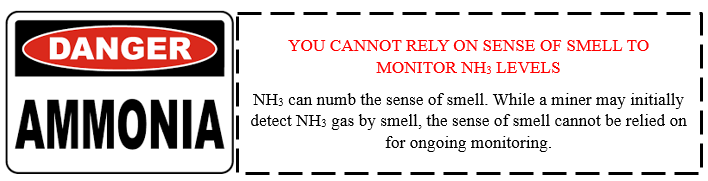
Ammonia has a sharp, pungent smell that can be detected at levels as low as 5 parts per million (ppm). However, smell alone cannot be relied upon for detection and appropriate warning. Industrial hygiene sampling equipment should be used to monitor levels of ammonia and personal exposure.
Exposure Limits
The Threshold Limit Value-Time Weighted Average (TLV-TWA) for ammonia is 25 ppm. Ammonia is Immediately Dangerous to Life and Health (IDLH) at 300 ppm.
First Aid
If ammonia gas is inhaled, relocate the person to fresh air. If liquid ammonia contacts the body, remove contaminated clothes and rinse with water for at least 15 minutes. Immediately seek medical aid. Stay informed on your required site-specific hazard awareness training including hazardous materials, warning signals, and evacuation procedures.